The Importance of DNS Security for E-commerce: Protecting Your Brand in 2026
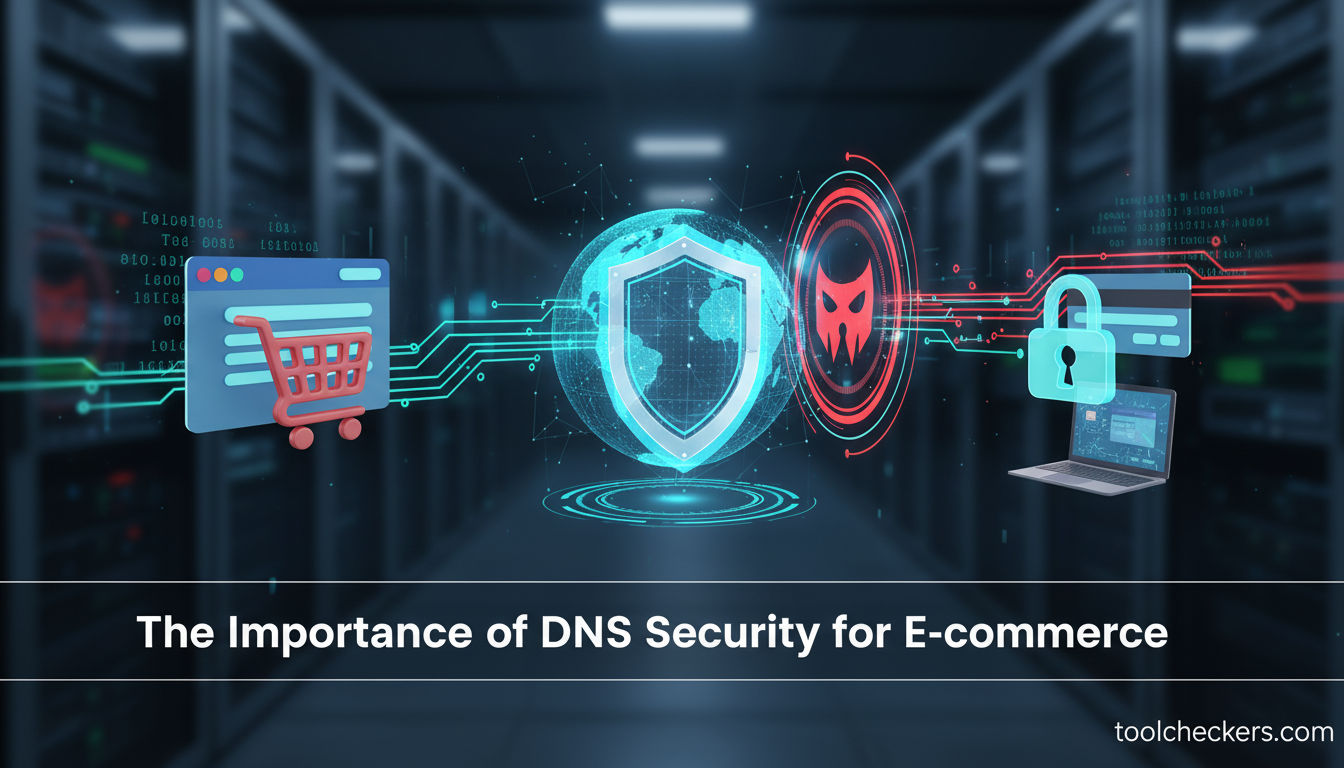
Why Do Hackers Target E-commerce DNS?
Quick Answer: Hackers target DNS because it acts as the "phonebook" of the internet; by compromising it, they can redirect legitimate shopping traffic to fraudulent mirrors. This manipulation allows for large-scale credential theft and payment intercept without the user ever leaving their browser.
In the high-stakes world of e-commerce, **DNS security** is no longer a "set and forget" configuration. As we move through 2026, cyber attacks have evolved from simple volumetric DDoS hits to sophisticated "Man-in-the-Middle" (MitM) interceptions. By attacking the Domain Name System, threat actors bypass the need to hack your actual web server. Instead, they exploit the trust between the resolver and the authoritative server.
This vulnerability is particularly acute for brands that haven't implemented a DNSSEC lookup. Without cryptographic signatures, a resolver has no way of knowing if the IP address it received for your store is genuine or a spoofed address leading to a phishing site.
How Can You Effectively Prevent Domain Hijacking?
Quick Answer: Domain hijacking is prevented through a multi-layered approach involving Registry Locks, Multi-Factor Authentication (MFA) on registrar accounts, and consistent monitoring of DNS zone files. These hurdles ensure that unauthorized transfers or record changes are blocked at the source.
Domain hijacking is the "nightmare scenario" for any online retailer. When an attacker gains control of your registrar account, they can change the ownership details or point the nameservers elsewhere. This results in an immediate loss of revenue and, more importantly, a catastrophic blow to **brand protection**.
To mitigate this, sophisticated e-commerce entities are now utilizing "Client-Lock" or "Registry-Lock" status. This requires a manual, offline verification process before any major changes can be made to the domain's status. Furthermore, integrated **phishing prevention** strategies should include monitoring for "typosquatting"—where attackers register domains similar to yours (e.g., yourst0re.com) to trick customers.
When Every Minute Counts: My Experience with DNSSEC Validation
I remember a Tuesday last November when one of our mid-sized e-commerce clients reported a strange "intermittent" drop in checkout conversions. On the surface, the site looked fine. But deep in the logs, we saw a cluster of users from a specific ISP getting "Certificate Mismatch" errors. My first thought was a failing SSL, but checking the MX records and standard A records showed nothing unusual.
I suspected a localized DNS cache poisoning. I jumped onto the DNSSEC Checker at ToolCheckers.com to verify the chain of trust. Within seconds, the tool highlighted a broken RRSIG (Resource Record Signature). It turned out the client had recently migrated their DNS provider, and the new DS (Delegation Signer) records hadn't correctly propagated to the parent zone.
Without that specific tool, I would have spent hours manually querying 'dig' commands across multiple global resolvers. Instead, I had a visual confirmation of the failure point in under a minute. We were able to quickly reference a guide on how to fix dnssec errors, update the parent registrar, and restore customer trust before the evening rush. It saved us at least four hours of high-stress troubleshooting.
What are the 2026 Compliance Requirements?
Quick Answer: Modern compliance frameworks like PCI-DSS 4.x and GDPR now implicitly require robust DNS protections as part of "Security by Design." This includes mandatory DNSSEC implementation for financial gateways and the use of encrypted DNS protocols like DoH (DNS over HTTPS) to protect user privacy.
Regulatory bodies have finally caught up with the reality that an insecure DNS is a data breach waiting to happen. For e-commerce stores operating in the EU or handling US credit card data, maintaining an auditable trail of DNS changes is becoming a standard requirement. Failure to secure the resolution path can be seen as negligence under the updated NIST Cybersecurity Framework.
Deep Technical Q&A
How does DNSSEC prevent "Man-in-the-Middle" attacks on checkout pages?
DNSSEC adds digital signatures to DNS records. When a browser requests your site's IP, the resolver validates the signature against a public key. If an attacker tries to inject a fake IP, the signature won't match, and the resolver will drop the response, preventing the user from reaching the fake checkout page.
What is the performance impact of implementing DNSSEC on a high-traffic store?
While DNSSEC increases the size of DNS responses (due to the inclusion of cryptographic keys), the latency impact is negligible (typically < 10ms) when using modern Anycast DNS networks that support hardware-accelerated signing.
What is a "Zone Walking" attack and how can e-commerce sites prevent it?
Zone walking involves using NSEC records to enumerate every subdomain in a DNS zone. To prevent this, use NSEC3, which provides hashed names, making it significantly harder for attackers to map out your internal staging or development environments.
How do CAA records enhance brand protection?
Certificate Authority Authorization (CAA) records allow you to specify which Certificate Authorities (e.g., Let's Encrypt, DigiCert) are allowed to issue SSL certificates for your domain. This prevents attackers from using a different CA to issue a "valid" certificate for a hijacked domain.
Why is "Hidden Master" DNS architecture recommended for enterprise e-commerce?
In a Hidden Master setup, the actual server containing the zone files is not publicly accessible. It only pushes updates to public-facing "slave" nodes. This protects the primary source of truth from direct DDoS attacks.
How does DANE (DNS-based Authentication of Named Entities) work?
DANE uses TLSA records in your DNS (secured by DNSSEC) to specify which SSL certificate the browser should expect. It effectively removes the need to trust external Certificate Authorities entirely by placing that trust in the DNS root.
What is the risk of "Subdomain Takeover" in e-commerce?
This occurs when a CNAME points to an external service (like a defunct Shopify store or an old AWS bucket) that is no longer active. An attacker can claim that external resource and host malicious content on your trusted subdomain.
Can Anycast DNS help mitigate DDoS attacks on my store?
Yes. Anycast spreads your DNS traffic across a global network of servers. If one node is hit by a massive DDoS attack, the traffic is automatically rerouted to the next closest healthy node, keeping your store online.

Ramal Jayaratne
Lead Developer & System ArchitectLead Developer at ToolCheckers, specializing in Python, Django, and System Architecture. With over a decade of experience, Ramal is dedicated to building transparent, high-performance developer tools.